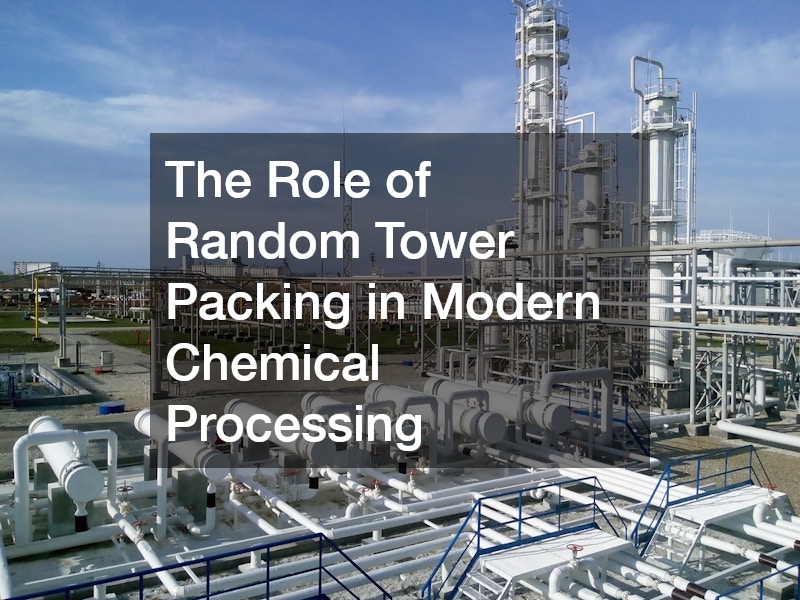

Random tower packing has become a cornerstone in the chemical industry’s pursuit of efficiency and effectiveness. It plays an increasingly pivotal role in streamlining operations and optimizing various chemical processing applications.
1. What is Random Tower Packing and How Does it Work?
1.1 Definition and Functionality
Random tower packing refers to materials used inside a processing tower to support gas and liquid contact. It works by maximizing surface area and improving mass transfer efficiency through a random, loose arrangement.
These materials are crafted to optimize contact between phases, which is essential for various chemical reactions. By facilitating efficient phase interaction, random packing improves both the speed and quality of processing.
The use of various geometrical shapes in packing materials enhances contact efficiency. Each shape is designed to meet the specific needs of turbulence and uniformity in chemical processes.
1.2 Historical Development and Innovations
The evolution of random tower packing technology has been marked by significant milestones. Initially, it was created from simple, naturally found materials, but has since evolved into highly-engineered solutions.
Recent innovations have introduced advanced materials like metal and ceramic, which resist chemical attack and withstand high temperatures. These innovations offer enhanced longevity and performance in demanding environments.
The continuous advancement shows the industry’s commitment to innovative improvements. This progress drives efficiency in operations and yields better economic and environmental outcomes.
2. Why is Random Tower Packing Essential in Chemical Engineering?
2.1 Efficiency Improvements
Random tower packing significantly enhances the efficiency of chemical processes by improving mass transfer rates. This improvement leads to more effective separation and reaction processes within the towers.
Its ability to increase contact efficiency reduces energy consumption, which is a critical factor in chemical engineering. Lower energy use translates into cost savings and a reduced environmental footprint.
Ultimately, the deployment of random tower packing directly influences the operational capabilities of a chemical plant. Its presence is crucial for maximizing throughput and product quality efficiently.
2.2 Cost-Effectiveness and Sustainability
Employing random tower packing offers substantial economic benefits, as it decreases resource consumption. By minimizing expenditures on energy and raw materials, the practice improves overall cost-effectiveness.
This technology also supports sustainability through its longer lifespan and recyclable materials. Such factors contribute positively to a company’s sustainability goals in today’s environmentally-conscious market.
Random tower packing thus represents a dual advantage in lowering financial and ecological costs. As industries face heightened pressure to minimize their carbon footprint, such solutions are indispensable.
3. How Does Random Tower Packing Influence Process Design?
3.1 Design Considerations
Designing with random tower packing requires attention to material compatibility with the processed chemicals. Geometrical configuration also plays a critical role in determining packing efficiency.
Engineers must consider factors like pressure drop and surface area within the columns. The right selection ensures optimized mass transfer without incurring additional mechanical strain.
Overall, a well-designed system balances these elements to achieve optimal performance. Smart design choices can drastically improve both the economic and operational aspects of production.
3.2 Impact on Process Scalability
Random tower packing facilitates easy scalability of chemical processes by allowing uniform expansion and enhancement. Its versatile applications mean systems can adapt readily to increased demands without compromising on quality.
The integrated design changes required for scaling often involve simple adjustments in packing density. This adaptability is a key benefit in an industry where scale change is frequent and necessary.
Furthermore, scalability is linked to material choice; durable materials ensure enduring effectiveness. The selection of packing thus becomes pivotal in planning for future process expansions.
4. What are the Types of Random Tower Packing and Their Applications?
4.1 Varieties of Packing Materials
Random tower packing encompasses a variety of materials such as plastic, metal, and ceramic. Each material type is suited to different chemical environments and operational conditions.
Plastics are lightweight and cost-effective, suitable for operations at moderate temperatures. In contrast, metal and ceramic provide superior resistance to thermal and chemical stresses.
Chemical engineers choose specific materials based on the processing needs they encounter. This ensures both operational reliability and efficiency across different chemical plants.
4.2 Application-Centric Approaches
Different types of random packing are optimized for distinct chemical processes, like distillation and absorption. The versatility of packing applications makes it integral in fine-tuning procedures to converge on desired outcomes.
Engineers customize application approaches to leverage the intrinsic benefits of each packing type. This optimization can lead to significant performance enhancements and cost reductions across multiple scenarios.
Tailored solutions are crucial for adapting to the unique challenges of various chemical industries. As such, effective use of tower packing is key in driving process-centric benefits.
5. What are the Challenges and Future Trends in Random Tower Packing?
5.1 Current Challenges
The implementation of tower packing technologies faces several challenges, including pressure drop concerns and fouling. These issues can significantly impact operational efficiency and system durability.
Maintaining a balance between effectiveness and cost remains a key challenge for industry professionals. Innovations continue to focus on mitigating these drawbacks to enhance packing performance.
Additionally, there’s a need for ongoing material improvements to withstand extreme conditions. Solving these challenges can lead to improved sustainability and efficiency in operations.
5.2 Future Innovations and Trends
The future of random tower packing is poised for exciting developments, with new materials and design techniques on the horizon. Innovations in material science promise enhanced performance attributes, driving efficiency even further.
There’s a trend towards integrating smart technology in tower packing applications. This could involve sensors and AI to monitor and optimize internal conditions in real-time.
As industries become more digitized, these trends signify a shift towards more intelligent, adaptive chemical processing solutions. The dynamic evolution of tower packing continues to shape the future of chemical engineering.